Council of Heads of Australasian Herbaria
Australian National Herbarium
Biographical Notes

|
|
Council of Heads of Australasian Herbaria | |
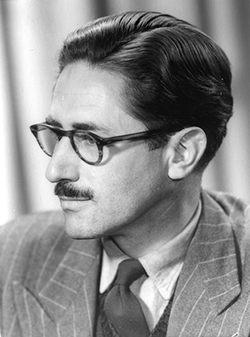 Key, Kenneth Hedley Lewis (Ken) (1911 - 2002)
Born on 28 August 1911 in Cape Town, South Africa; died: 11 January 2002 in Canberra, ACT.
In 1930 he was awarded a Bachelor of Science (BSc), University of Cape Town, South Africa.
In 1931 he was awarded a Master of Science (MSc), University of Cape Town, South Africa.
In 1935 he was awarded a Doctor of Philosophy (PhD), Imperial College of Science and Technology, London, UK.
In 1936 he migrated to Australia to take up a position as Assistant Research Officer, CSIR Division of Economic Entomology.
From 1959 to 1967, he was Curator, CSIRO Division of Entomology.
From 1968 to 1970 he was Chief Curator, Australian National Insect Collection, CSIRO Division of Entomology.
He retired in 1976.
From 1976 to 1994 he was Honorary Research Fellow, CSIRO Division of Economic Entomology.
Ken was an entomologist who was expert on the taxonomy and ecology of Australian grasshoppers and locusts. He was appointed to the CSIR Division of Economic Entomology in 1936 in the wake of devastating plagues of Australian plague locusts and for over 20 years conducted research to understand and control these pests.
Recognising the absence of reliable taxonomic, ecological, soil and climate data he set about gathering such information, including working from historic records. He conducted surveys, observed regional and seasonal variation, and built the Division's collection of Orthoptera into one of the world's most comprehensive.
Many of the specimens he collected proved to be new species and he identified five species of economic importance.
He published nearly 100 papers and books including major works on Acrididae, Eumastacidae and Pyrgomorphidae.
For nine years he served on the International Commission on Zoological Nomenclature.
Dr Key was an
extremely meticulous worker. He left
copious notes and records covering all his
studies including very detailed field note-books of every collecting site he ever
visited and records of every overseas type
specimen he ever studied. Ken left nothing
to chance.
Source: Extracted from:
https://www.asap.unimelb.edu.au/bsparcs/biogs/P000540b.htm
https://www.eoas.info/biogs/P000540b.htm
Historical Records of Australian Science, 2004, 15, p.65
Portrait Photo: Historical Records of Australian Science, 2004, 15, p.66.
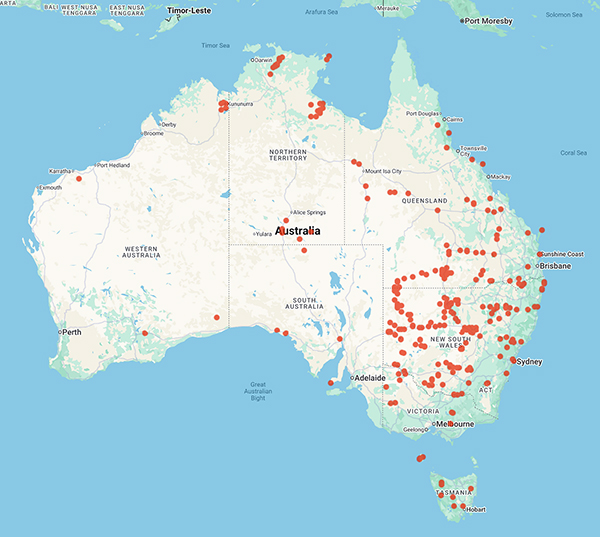
Data from 407 plant specimens